A practical guide to sound baths, wellbeing, safety, and realistic expectations
SMRTI LIFE CARE | Sound Healing
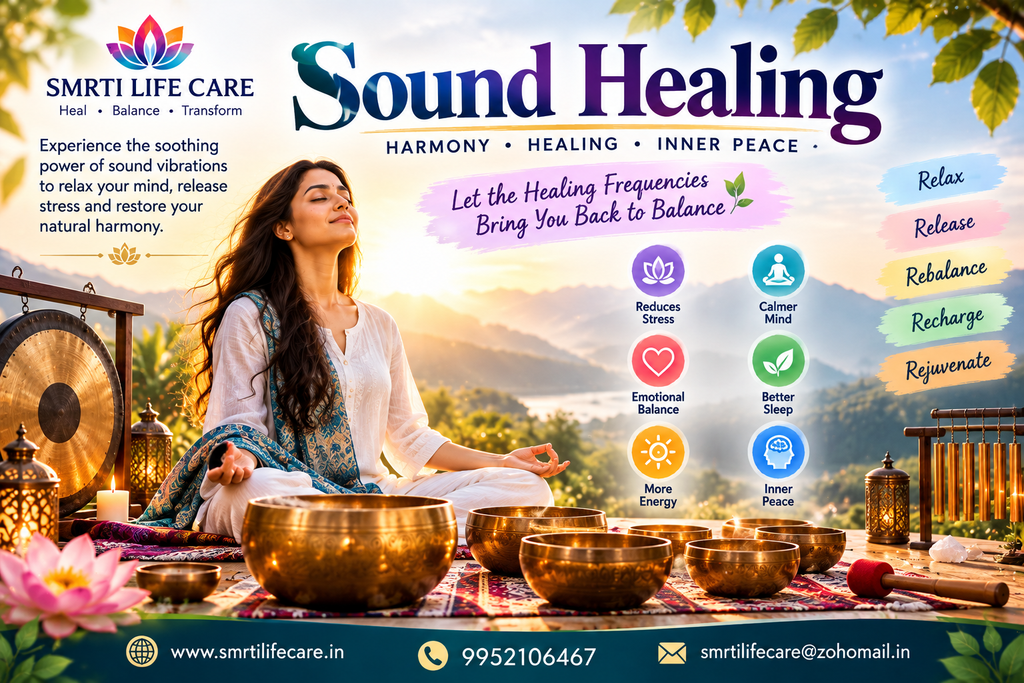
Introduction: Making space to listen
Sound is part of everyday life: the rhythm of rain, the resonance of a singing bowl, a familiar melody, or the quiet hum of a room. Sound-based wellness practices invite people to pause and listen intentionally. For some, this creates a sense of calm or reflection; for others, particular sounds may be distracting or uncomfortable. Both responses are valid.
Sound healing is an umbrella term used for a variety of practices involving instruments, voice, music, or recorded sound. A sound bath is one common format in which participants rest and listen to sustained or layered sounds. These practices may be meaningful as complementary wellbeing experiences, but claims that specific frequencies cure disease, detoxify organs, or replace medical care are not established by strong scientific evidence.
This guide answers all 40 questions in the supplied topic list. The case examples are fictional composites for illustration, not real testimonials or clinical evidence. The aim is to help readers make informed choices without exaggerated promises.
A note on safety
Sound should remain comfortable and voluntary. Tell the facilitator about hearing conditions, tinnitus, sound sensitivity, migraines, sensory concerns, or trauma-related triggers. Ask about volume and the option to stop, move away, use ear protection, or leave. Sound healing should not replace medical or mental-health treatment. If symptoms are severe, persistent, or worsening, seek qualified professional care.
Part One: The Basics and the Evidence
1. Does Sound Healing actually work? What does science say?
Some people find sound sessions relaxing and emotionally meaningful. Research on sound baths and related practices is still developing, and results vary. Sound healing is not a proven cure for disease, and it should be presented as complementary wellbeing support rather than medical treatment.
2. What should I expect during your first Sound Bath session?
You will usually sit or lie comfortably while a facilitator plays instruments such as singing bowls, chimes, gongs, or gentle percussion. You may feel calm, emotional, restless, or notice no special effect. You can change position, use ear protection, ask for quieter sound, or leave at any time.
3. How often should you do Sound Healing?
There is no scientifically established schedule that works for everyone. Frequency depends on personal preference, comfort, goals, and budget. Try a session, reflect on how you feel, and decide freely whether to repeat it.
4. Can Sound Healing help with anxiety and stress?
Calming sound may help some people unwind, but sound healing is not a proven treatment for anxiety disorders. It can be an optional complement to appropriate mental-health care. Stop if sound increases agitation or distress.
5. What are healing frequencies, and do they really work?
Some wellness traditions assign spiritual meanings to particular frequencies. These meanings should not be presented as established medical facts. There is no robust evidence that one exact frequency universally heals a particular organ or disease.
6. Is Sound Healing safe? Who should be cautious?
Gentle sessions are tolerated by many people, but loud or sudden sounds can cause discomfort and may risk hearing damage. People with tinnitus, hyperacusis, migraines, trauma-related triggers, or sensory sensitivities may need adaptations. Ask about volume and the option to stop.
7. Sound Healing vs. meditation: which should you try?
Meditation involves attention or awareness and may be silent or sound-based. A sound bath centres listening as the main activity. Choose whichever feels comfortable; neither is universally better.
8. How much does a Sound Bath cost?
Prices depend on location, session length, group size, instruments, and practitioner. Ask for the full cost before booking and compare local options. A high price does not guarantee a better experience.
9. Can Sound Healing help with chronic pain?
Some people find music or gentle sound relaxing while living with pain, but sound healing is not a proven cure for chronic pain. Keep an appropriate pain-management plan and stop if sound, vibration, or positioning worsens symptoms.
10. What is the difference between Sound Healing and a Sound Bath?
Sound healing is a broad term for practices using sound with a wellbeing intention. A sound bath commonly involves resting and listening to layered or resonant sounds. Definitions vary, so ask the facilitator what their session includes.
Part Two: Choosing and Preparing for a Session
11. Do I need special skills or experience?
No musical or meditation experience is required. You can simply listen and notice your comfort. There is no correct way to experience a session and no need to report a dramatic sensation.
12. How can Sound Healing support mental health?
A sound-based activity may provide a structured pause or help some people relax. It is not a substitute for assessment or treatment of mental-health conditions. Responsible practitioners avoid promising emotional cures and refer people to qualified care when needed.
13. What should I ask before booking a Sound Healer?
Ask about training, instruments, volume, session length, fees, consent, and whether you can pause or leave. Explain any sound sensitivity or relevant health concerns. Be cautious of guaranteed cures or advice to stop medical treatment.
14. Can Sound Healing help with sleep issues?
A relaxing listening routine may help some people wind down, but sound healing is not an established treatment for insomnia. Keep regular sleep habits and seek clinical advice for persistent sleep problems. Avoid loud sounds close to the ears.
15. Sound Healing for beginners: a complete guide
Choose a comfortable setting and a facilitator who explains the process. Start with a shorter or quieter session if unsure. Keep expectations realistic: relaxation is possible, but a special experience is not required.
16. What instruments are used?
Sessions may use singing bowls, gongs, chimes, tuning forks, drums, bells, voice, or recorded music. Sound and volume vary widely. Ask what will be played, especially if sudden or intense sounds are difficult for you.
17. How long does it take to feel results?
Some people feel relaxed during or after a session; others notice no clear change. There is no validated timeline for treating medical conditions. Observe your own experience without interpreting every sensation as proof of healing.
18. Is Sound Healing covered by insurance?
Coverage depends on the insurer, policy, provider, and service classification. Do not assume it is reimbursable. Check your policy and ask the insurer directly; coverage in India varies by plan.
19. Can you do Sound Healing at home?
Yes, if you enjoy it and keep the volume comfortable. Gentle music, humming, or a simple instrument may be part of a relaxation routine. Avoid prolonged loud listening and do not rely on sound to treat disease.
20. What is the difference between a Sound Bath and a concert?
A concert usually centres on musical performance; a sound bath usually emphasises rest and personal listening. The distinction is not absolute, and neither format guarantees therapeutic effects. Volume, setting, and personal preference matter.
Part Three: Emotional, Practical, and Everyday Uses
21. Sound Healing for grief and emotional release
Music and sound can bring memories or emotions forward for some people. Crying or having a strong response is not proof of a special release. Choose a facilitator who respects boundaries, and seek grief support if distress becomes overwhelming.
22. Can Sound Healing help with focus and productivity?
Some people use gentle music to create a work ritual, while others concentrate better in silence. No frequency is proven to boost productivity for everyone. Test what works for your tasks and judge by the quality of your work.
23. What should I wear to a Sound Bath?
Wear comfortable clothing and bring a layer if the room may be cool. A mat, cushion, or blanket may be useful if permitted. Tell the facilitator if lying flat is uncomfortable and ask whether a chair is available.
24. How do I find a reputable practitioner?
Look for clear information about training, fees, session format, consent, and safety. A reputable facilitator respects sound sensitivity and avoids guarantees. Be wary of fear-based claims, pressure to buy packages, or advice to avoid clinicians.
25. Sound Healing for corporate wellness: does it work?
A sound session may offer employees a structured break, but outcomes vary. Participation should be optional, with a quiet alternative for people who dislike sound. It cannot replace reasonable workloads, psychological safety, or employee support.
26. Can Sound Healing help with addiction recovery?
Sound may be one optional relaxation activity for some people in recovery, but it is not a stand-alone treatment for substance-use disorders. Recovery may require medical care, counselling, medication, and peer support. Do not accept claims that frequencies cure addiction or remove cravings.
27. What makes a good Sound Healer vs. a bad one?
A responsible practitioner explains the process, obtains consent, adapts volume, and is honest about limitations. Warning signs include guaranteed cures, fear-based claims, pressure to buy costly packages, and advice to stop medication. Professionalism is shown through safety and respect.
28. How should testimonials be understood?
Personal stories describe an individual’s experience but cannot prove that a practice works for everyone. Testimonials should be genuine, shared with consent, and not imply guaranteed results. This article uses fictional examples rather than inventing real client testimonials.
29. Can children benefit from Sound Healing?
Some children enjoy gentle music, but sensory preferences vary. Use low volume, keep sessions brief, supervise, and let the child stop at any time. Sound-based relaxation does not replace paediatric assessment or treatment.
30. How should I prepare mentally and physically?
Wear comfortable clothes, hydrate normally, and arrive with realistic expectations. Tell the facilitator about tinnitus, migraines, sound sensitivity, trauma triggers, or other concerns. Decide in advance that you can change position, use ear protection, or leave.
Part Four: Sensitivity, Safety, and Informed Choice
31. Sound Healing and chakras: what is the connection?
Some spiritual traditions associate sounds with chakras. These are spiritual frameworks, not established anatomical structures or validated medical treatment targets. They may be explored as reflection or meditation without claiming that sound objectively diagnoses or repairs disease.
32. Why does Sound Healing feel relaxing?
A quieter environment, focused listening, slower breathing, reduced demands, and the personal meaning of sound may contribute to relaxation. Responses differ, and some sounds can be irritating or frightening. You do not need to attribute relaxation to a supernatural mechanism to value it.
33. Sound Healing for athletes: recovery and performance
Athletes may use calming music as part of rest or focus routines. Sound healing is not established as a way to repair injury or guarantee better performance. Training, sleep, nutrition, rehabilitation, and clinical care remain central.
34. What if Sound Healing does not work for me?
That is a valid outcome. Not everyone finds sound baths relaxing, and you do not need to attend more sessions or believe more strongly. You can choose silence, walking, music you enjoy, or another approach.
35. Group Sound Baths vs. private sessions
Group sessions may cost less and offer a shared atmosphere, while private sessions may allow more individual adjustments. Ask about volume, instruments, group size, and the ability to pause. Choose based on comfort and budget, not claims that one format is inherently more powerful.
36. Sound Healing for sensitive people: is it too much?
It can be. People with tinnitus, hyperacusis, migraine, sensory differences, or trauma triggers may find some instruments overwhelming. Ask for lower volume, more distance, ear protection, or a shorter session, and stop if you feel pain or marked distress.
37. Can Sound Healing replace medical treatment?
No. It should not replace medication, medical evaluation, psychotherapy, rehabilitation, or recommended treatment. It may be an optional complementary practice if safe and helpful. Never change treatment based only on a sound healer’s advice.
38. What should I reflect on after a session?
Ask whether you felt comfortable, whether the volume suited you, and whether you felt calmer, emotional, unchanged, or uncomfortable. Note any sound that triggered distress. You do not need to interpret every sensation or make a major decision because of a session.
39. Sound Healing myths debunked
A single frequency is not proven to cure a particular disease; discomfort does not prove toxins are leaving; everyone need not experience an emotional release; and sound healing cannot replace medicine. Sound may be meaningful and relaxing for some, but honest claims and informed consent matter.
40. How do I know if I am ready to try Sound Healing?
You may be ready if you are curious, understand that responses vary, and feel free to ask questions or stop. Check the facilitator’s approach, fees, volume, and safety practices. Keep appropriate professional care in place for medical or mental-health concerns.
Five illustrative case examples
These fictional scenarios illustrate responsible facilitation and realistic expectations. They are not testimonials, proof of efficacy, or claims that sound healing treats a medical condition.
Case example: The overloaded professional
A fictional office worker chose a gentle sound session after a demanding work period. She found the quiet setting useful for taking a break, but the facilitator did not claim that sound had cured burnout. She also reviewed her workload, sleep, and boundaries. Lesson: sound may support a pause, while sustainable change often requires practical action.
Case example: A sound-sensitive participant
A fictional participant with sound sensitivity found a gong unexpectedly intense. The facilitator stopped, offered a quieter space, and checked what the participant wanted to do next. No one described the reaction as resistance or a spiritual blockage. Lesson: consent and adjustment are essential.
Case example: Grief and music
A fictional person grieving a family member felt moved by an instrument during a session. The facilitator gave them privacy and did not insist that the emotion represented a special release. The person later sought support from family and a grief counsellor. Lesson: emotions can arise, but they should be handled without pressure or exaggerated claims.
Case example: Sleep and realistic expectations
A fictional client hoped a sound bath would solve persistent insomnia. The session helped him unwind one evening, but sleep difficulties continued. He sought clinical advice and worked on sleep habits, keeping sound as an optional relaxation practice. Lesson: one pleasant experience is not proof of a treatment for insomnia.
Case example: When the practice is not a fit
A fictional participant felt no benefit from a group sound bath and preferred quiet walking. The facilitator accepted that preference without selling more sessions. Lesson: not every wellness practice suits every person.
A checklist before booking
Ask what instruments will be used and how loud the session may be.
Confirm session duration, group size, fees, accessibility, and cancellation terms.
Tell the facilitator about sound sensitivity, tinnitus, migraines, or other relevant concerns.
Check that you can pause, change position, use ear protection, or leave.
Be cautious of guaranteed cures, fear-based claims, and pressure to purchase packages.
Keep prescribed medical and mental-health care in place.
Conclusion: Let sound be an invitation, not a promise
Sound healing may offer some people a meaningful pause, a calming listening experience, or a way to reflect. Its effects vary, and it is not necessary to feel a dramatic sensation for a session to have personal value. The safest approach is to remain curious, communicate your needs, and choose a facilitator who respects consent and evidence.
A responsible sound-based wellness practice does not promise to cure illness, blame people when they do not respond, or discourage medical care. Let your experience, comfort, and realistic goals guide your decision.
About SMRTI LIFE CARE
SMRTI LIFE CARE
+91 9952106467
www.smrtilifecare.in
smrtilifecare@zohomail.in
www.learn.nalanda.guru
Editorial and health note: This article is for general information and wellbeing education, not diagnosis or treatment. Sound healing is complementary and should not replace medical or mental-health care. Case examples are fictional.